
Subtitle for This Block
Title for This Block
Text for This Block
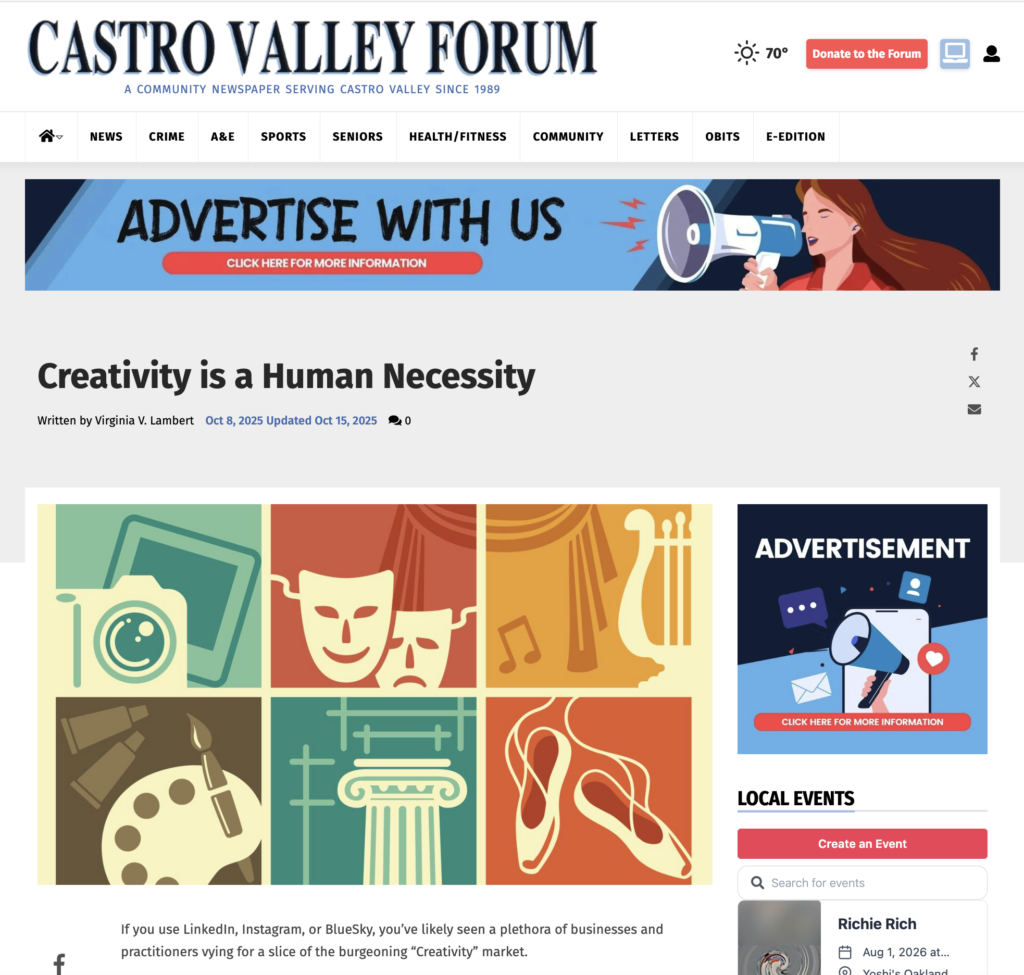
If you use LinkedIn, Instagram, or BlueSky, you’ve likely seen a plethora of businesses and practitioners vying for a slice of the burgeoning “Creativity” market.
We don’t often hear the talking points on how the arts contribute to a nation better prepared to compete globally in science, technology, engineering, and math (STEM), let alone how the arts serve as a powerful positive intervention in the subjective and psychological well-being of children.
There is ample literature correlating the arts and improved performance in STEM-related subjects. The issue is understanding the research, determining whether a study generalizes to your population, the realities of being able to replicate conditions from a study without requiring an Institutional Review Board (IRB), which is required if you work with human participants, and buy-in from all the necessary stakeholders to deploy a comprehensive and successful arts intervention.
It can be a daunting initiative. It’s no wonder some administrators and educators are left overwhelmed. This explains why some school districts have yet to utilize Proposition 28 funds, while others are ahead of the curve.
The need to incorporate the arts in the American education system has been well-documented for nearly a century. The Truman Commission of 1947 and the Spellings Commission of 2006 saw a need for drastic education reform, explicitly calling for a more well-rounded curriculum. One important point mentioned is “citing the growing success of higher education in other nations and the simultaneous stagnation in quality at U.S. Institutions”.
Although this information may be dated and primarily relates to college students, it remains relevant for two key reasons. First, college students were once elementary grade students, and second, not much has changed from the previous claim. A 2022 global Program for International Student Assessment (PISA) comparison of literacy scores from approximately 81 nations portrays the United States as struggling globally. The United States ranked 34th with an average score of 465, falling below the Organization for Economic Cooperation and Development (OECD) average of 472.
Of course, there are many variables contributing to these scores; however, one common denominator for many of the higher-performing nations is that they recognize the value of a quality arts curriculum. They see it reflected in their children’s academic performance, as well as subjective and psychological well-being.
When you have experience with the arts as a consumer and producer at an early age, you are more likely to support it in adulthood, according to a 2018 Americans for the Arts public opinion report. Additionally, there are inherent life lessons to be learned, such as cultural sensitivity, cultural capital, community, belonging, and spatial skills, which are critical to performance in core subjects. The arts, when done well, cultivate these timeless attributes.